Structural Drying and Dehumidification in Woodland Hills, CA
Surfaces dry in a day; framing, subfloor and slab do not. The drying team sizes air movers and dehumidifiers to each room and keeps them running until readings say the structure is dry.
(888) 578-6508Start the structural dry-out now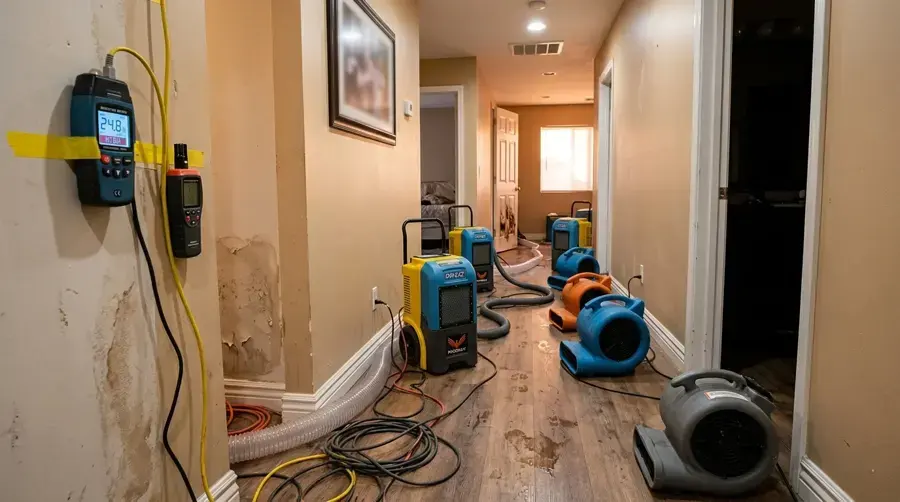
How structural drying is handled in Woodland Hills
Moisture mapped first
The tech who does the walkthrough maps every wet material with pinless meters and thermal imaging before any equipment goes down.
Dried to the S500 goal
The drying team sizes air movers and LGR dehumidifiers to each room and keeps them running until readings reach the drying goal.
Documented for the claim
Daily readings, a moisture map and timestamped photos go into a claim file adjusters can follow.
Before the drying equipment goes in
- 1
Open the space
Clear furniture and boxes away from wet walls so air can reach them.
- 2
Leave the windows shut
Opening windows can pull humid air in; dehumidifiers work best in a closed room.
- 3
Keep the equipment running
Leave air movers and dehumidifiers on and plugged in until the drying team adjusts them.
- 4
Note any new stains
Tell the drying team about new stains or odors between readings.
What does structural drying cost in Woodland Hills, CA?
In Woodland Hills, CA, structural drying typically runs $1,000 to $6,000, depending on the number of rooms, the class of the loss and how many days the equipment has to run.
Class 1 or 2, one area
$1,000 to $2,200- A few air movers
- One dehumidifier
- Three to four days
Several rooms
$2,200 to $4,200- More equipment
- Cavity drying
- Daily logs
Class 4 materials
$4,200 to $6,000+- Slab or hardwood
- Desiccants and mats
- Longer run
The drivers are the water category, the square footage, the material class and how fast drying started. For a planning range, try the water damage cost calculator.
The structural drying process, step by step
- Step 1
Map
The tech maps moisture and picks a dry reference in the same building.
- Step 2
Size
Air movers and dehumidifiers are sized to the class of loss and the room.
- Step 3
Read daily
Readings and psychrometric logs are taken every day.
- Step 4
Verify
Equipment comes out only when materials meet the drying goal.
Structural drying is the part of water damage restoration that decides whether problems show up months later. Paint and carpet can feel dry in a day, while the bottom plate of a wall, the subfloor under vinyl or a concrete slab still holds water. In Woodland Hills, dry Santa Ana air in fall and hot summers can make surfaces look dry quickly, which is exactly why the drying team works from readings, not from touch.
How the drying plan is built
The IICRC S500 is the industry drying standard, and the plan follows it:
- Moisture mapping with pinless meters and thermal imaging before any equipment goes down
- A dry reference: a reading from the same material in an unaffected part of the building
- The class of loss, Class 1 through 4, which sets how much equipment each room needs
- Air movers set to the room's evaporation load, with LGR dehumidifiers pulling that moisture out of the air
- Desiccant dehumidifiers and drying mats for Class 4 materials such as slab, hardwood and plaster
Readings every day
The drying team records moisture in the wet materials and psychrometric readings, temperature and humidity, every day. Equipment is moved or added as materials dry unevenly, and removed only when wet materials sit within 2 to 4 points of the dry reference. A contained Class 1 or 2 loss usually dries in three to five days; slab, hardwood and plaster take longer. Hardwood-specific drying is covered on the hardwood floor page.
Why it matters for the claim
A drying log is the proof the structure was dried to standard. It carries the moisture map from day one, daily readings, equipment counts and photos. Adjusters use it to follow the scope line by line. The EPA explains how moisture control prevents indoor air problems, and the EPA indoor air quality program covers humidity basics for homes. Coverage depends on your policy, so it is worth checking with your own insurer.
Where structural drying is handled around Woodland Hills
The Woodland Hills restoration crew works ZIP codes 91364 and 91367, from the Serrania hillsides and the Ventura Boulevard corridor to Warner Center and Walnut Acres, plus Tarzana, West Hills, Canoga Park and Calabasas next door.
See every neighborhood coveredRelated water damage services in Woodland Hills
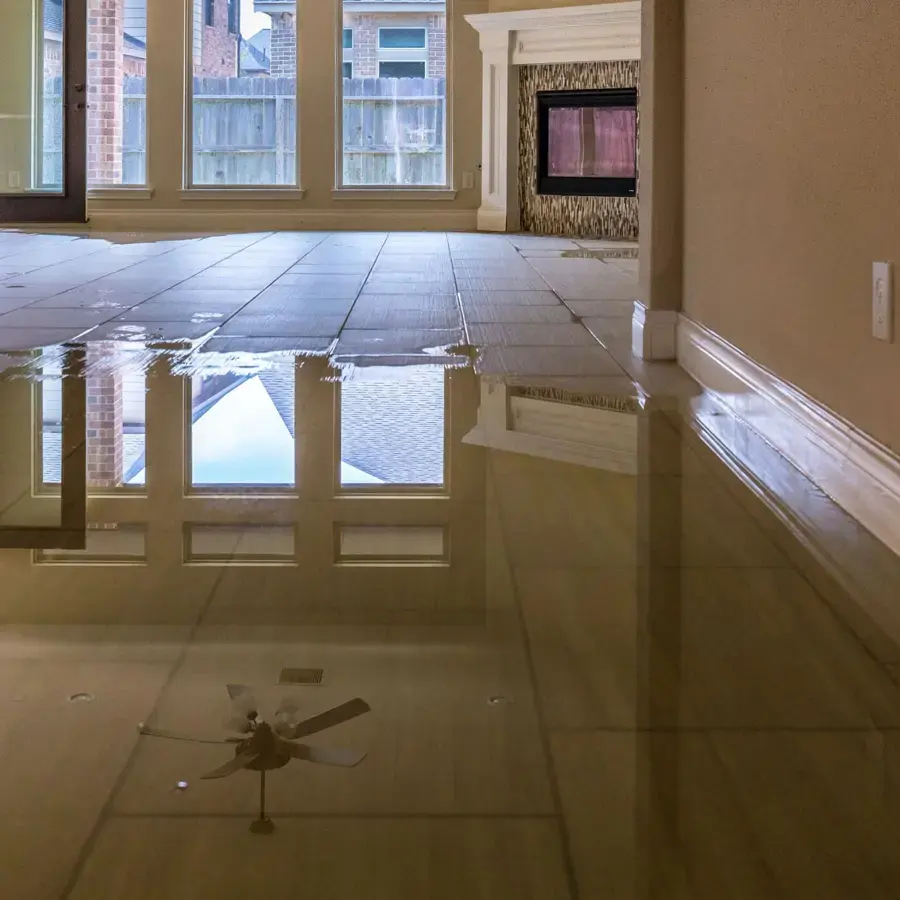 Water Extraction and RemovalTruck-mounted extraction pulls standing water before it wicks into walls, cabinets and subfloor.View service
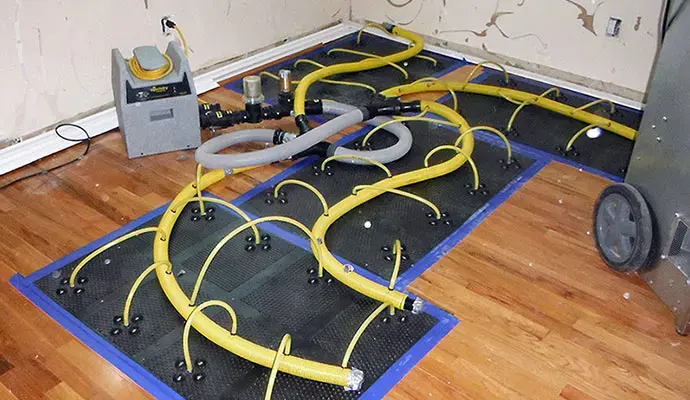 Hardwood Floor Water DamageCupped or crowning wood floors dried with mats and dehumidifiers where they can be saved.View service
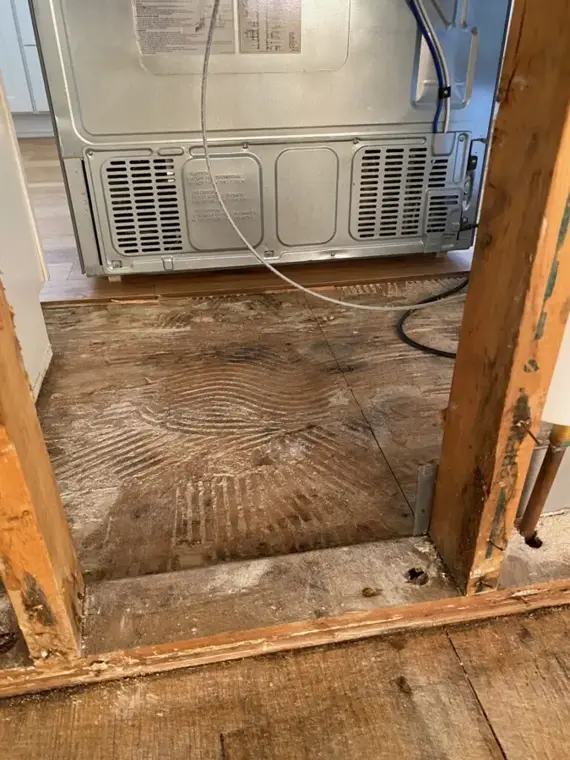 Slab Leak Water DamagePinholes in copper under older ranch slabs, traced with thermal imaging and dried.View service
Structural drying questions in Woodland Hills
Q1What does dry actually mean?
Under the IICRC S500, a material is dry when its reading is back near the reading of the same material in an unaffected part of the building, usually within 2 to 4 points of that dry reference.
Q2Why not just open the windows and run fans?
Fans move water into the air, but without dehumidifiers that humid air stays in the house and moisture moves into other materials. Controlled dehumidification pulls it out of the building.
Q3How many air movers does a room need?
It depends on the class of loss and the room's size and materials. The drying team sizes equipment to the evaporation load and adjusts it daily.
Q4Can I turn the equipment off at night?
It is best to leave it running. Turning it off slows drying and can add days. The drying team can adjust placement if noise is a problem.
Q5What is a Class 4 loss?
Class 4 covers materials that hold water deep and dry slowly, such as concrete, hardwood, plaster and stone. It usually needs desiccant dehumidifiers, drying mats and longer drying times.
Q6How long does structural drying take?
A contained Class 1 or 2 loss usually dries in three to five days. Slab, hardwood and plaster take longer. Equipment comes out on readings, not on a schedule.
Need a Woodland Hills home dried to standard? Call now.
The drying team maps the moisture, sizes the equipment to each room and keeps it running until readings meet the IICRC S500 goal.