Storm Flood Cleanup in Woodland Hills, CA
When a winter storm pushes water under the door, the response team pumps it out, removes what the flood water soaked and dries the structure to a verified reading.
(888) 578-6508Storm water inside? Call now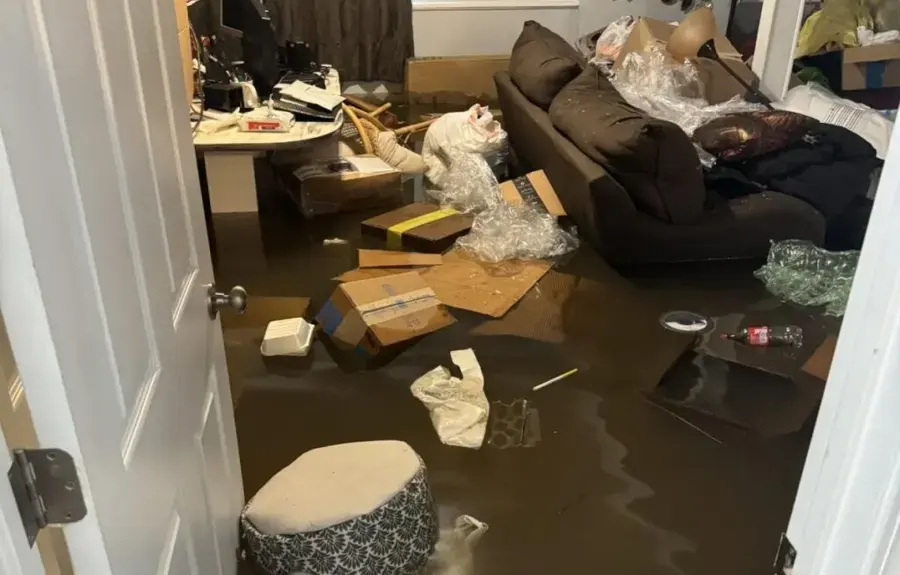
How storm flood cleanup is handled in Woodland Hills
Moisture mapped first
The tech who does the walkthrough maps every wet material with pinless meters and thermal imaging before any equipment goes down.
Dried to the S500 goal
The drying team sizes air movers and LGR dehumidifiers to each room and keeps them running until readings reach the drying goal.
Documented for the claim
Daily readings, a moisture map and timestamped photos go into a claim file adjusters can follow.
While the storm water is still coming in
- 1
Stay out of deep water
Do not wade where water covers outlets, cords or appliances.
- 2
Cut power if safe
Switch off breakers for flooded rooms only from a dry spot at a dry panel.
- 3
Block the entry
Sandbags or towels at the door slow the water while the storm passes.
- 4
Photograph the rooms
Shoot the water line and every room before anything is moved.
What does storm flood cleanup cost in Woodland Hills, CA?
In Woodland Hills, CA, storm flood cleanup typically runs $2,500 to $12,000 or more, depending on the depth of the water, how many rooms it reached and how much flooring and drywall has to come out.
Garage or entry
$2,500 to $4,500- Pump-out
- Cleaning and treatment
- Short drying run
Ground-floor rooms
$4,500 to $8,500- Flooring removed
- Flood cuts
- Daily moisture logs
Deep or widespread water
$8,500 to $12,000+- Whole floor affected
- Containment
- Extended drying
The drivers are the water category, the square footage, the material class and how fast drying started. For a planning range, try the water damage cost calculator.
The storm flood cleanup process, step by step
- Step 1
Pump out
The response team pumps and extracts standing storm water.
- Step 2
Strip
Wet carpet, pad, baseboard and drywall come out above the water line.
- Step 3
Clean and treat
Surfaces are cleaned and an EPA-registered antimicrobial is applied.
- Step 4
Dry and verify
Dehumidifiers and air movers run until readings meet the goal.
Woodland Hills gets most of its rain in a handful of winter storms between December and March. Atmospheric rivers can drop inches of rain in a day, and the flat streets north of Ventura Boulevard, the Victory Boulevard flats and the blocks near the Arroyo Calabasas channel, collect that water fast when storm drains fall behind. Sunken living rooms, garages below street level and ground-floor units in Warner Center are the first places it reaches.
What makes storm water different
Water that came in from outside has crossed streets, yards and gutters, so the IICRC S500 treats it as Category 3. That sets the plan:
- Carpet and pad the storm water touched are removed, not dried
- Drywall is cut above the high-water line, and wet insulation comes out
- Hard surfaces are cleaned and treated with an EPA-registered antimicrobial
- Contents are sorted into what can be cleaned and what is photographed and listed
When the water carried mud off a slope, the job follows the hillside mudflow process instead.
Drying after the storm
Once the wet materials are out, the drying team sets LGR dehumidifiers and air movers to the evaporation load of each room. Concrete slabs under ground-floor rooms hold water for days and may need desiccant drying. The team takes readings daily and pulls equipment only when materials sit within 2 to 4 points of a dry reference in the same building. A contained storm loss often dries in four to six days after demolition.
Flood coverage and the claim file
Rising surface water is usually handled by flood insurance, not a standard homeowner policy, while rain that came through a damaged roof may be treated differently. FEMA explains how flood insurance works, and the National Weather Service Los Angeles office posts storm watches for the Valley. The claim file carries photos, the category of the water, the moisture map and daily readings. Coverage depends on your policy, so it is worth checking with your own insurer.
Where storm flood cleanup is handled around Woodland Hills
The Woodland Hills restoration crew works ZIP codes 91364 and 91367, from the Serrania hillsides and the Ventura Boulevard corridor to Warner Center and Walnut Acres, plus Tarzana, West Hills, Canoga Park and Calabasas next door.
See every neighborhood coveredRelated water damage services in Woodland Hills
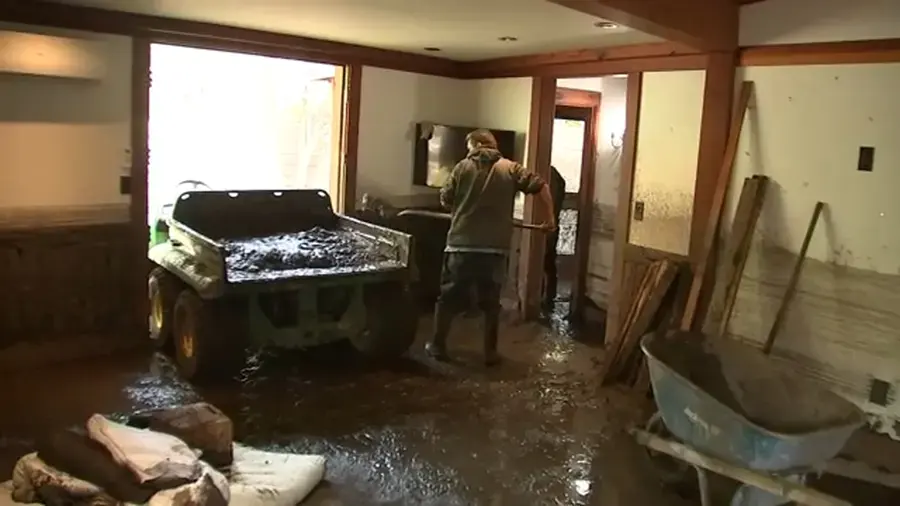 Hillside Mudflow Water DamageMud and runoff that push off the slope into lower rooms and garages, shoveled out and dried.View service
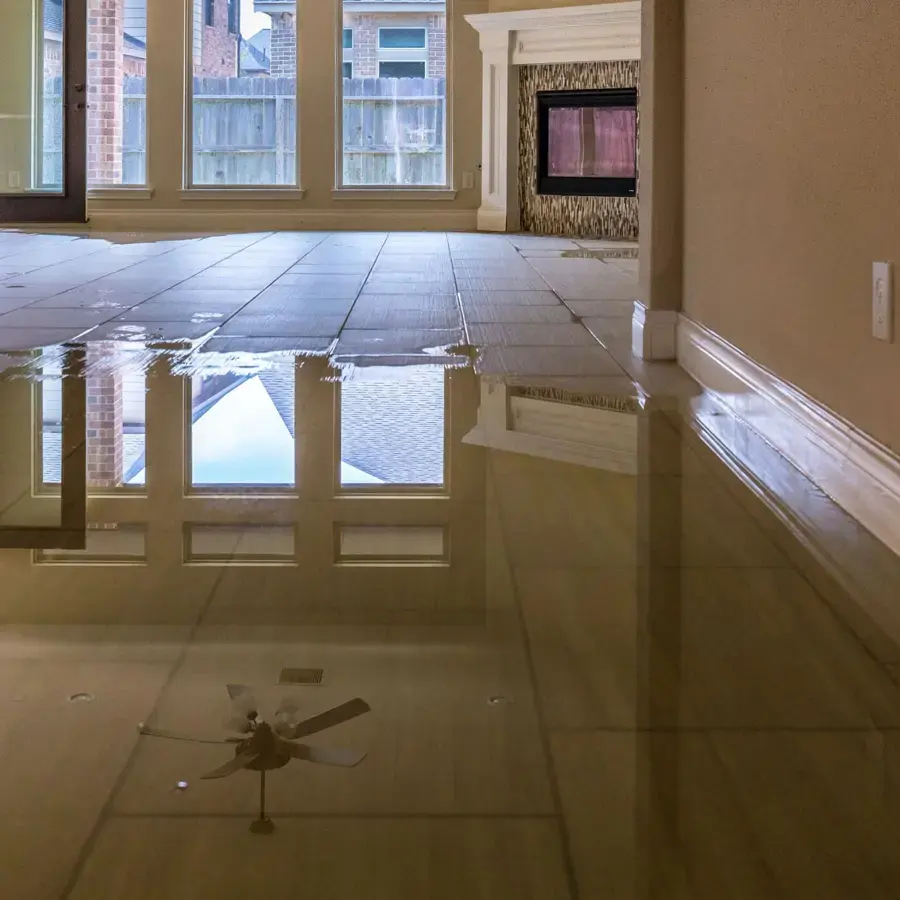 Water Extraction and RemovalTruck-mounted extraction pulls standing water before it wicks into walls, cabinets and subfloor.View service
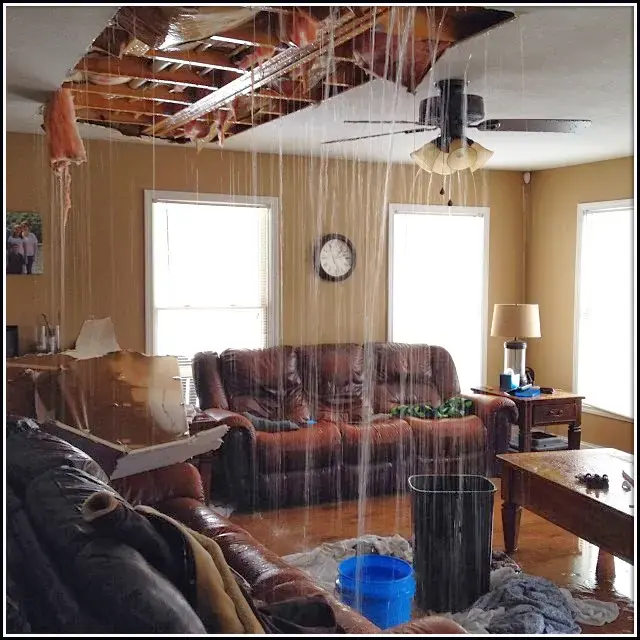 Roof Leak Water DamageSun-baked roofs that give way in the first big storm, dried from attic to floor.View service
Storm flood cleanup questions in Woodland Hills
Q1Is storm water dangerous to clean up myself?
Storm water is Category 3: it carries bacteria from streets and yards and can hide live electrical hazards. Stay out of deep water, keep children and pets away and let the response team handle the pump-out and removal.
Q2Does homeowners insurance cover storm flooding?
Rising surface water is usually covered by flood insurance rather than a standard homeowner policy. Rain that entered through storm damage to the roof may be treated differently. Coverage depends on your policy, so it is worth checking with your own insurer.
Q3Why does the carpet have to go?
Carpet and pad touched by Category 3 water cannot be reliably cleaned, so they are removed. Hard flooring may be cleaned and dried depending on the material and how long it sat.
Q4How high are the drywall cuts?
Usually 12 to 24 inches above the highest water line, or higher where readings show water wicked up the wall. The cut exposes wet insulation and framing so they can be removed or dried.
Q5How long does drying take after a storm flood?
Most contained storm losses dry in four to six days once wet materials are out. Slabs and lower levels against a slope take longer. Equipment leaves when readings meet the drying goal.
Q6What can I do before the next storm?
Clear gutters, yard drains and the storm drain in front of the house, check the garage door seal and keep sandbags on hand. The county posts sandbag locations before major storms.
Storm water inside in Woodland Hills? Call now.
The response team pumps the water out, removes what it soaked and dries the structure to the IICRC S500 goal.