Condo and Apartment Water Damage in Woodland Hills, CA
In a stacked building one failed line can wet three homes. The restoration team maps every affected unit, dries each one to the IICRC S500 goal and keeps a separate log for each owner.
(888) 578-6508Leak from the unit above? Call now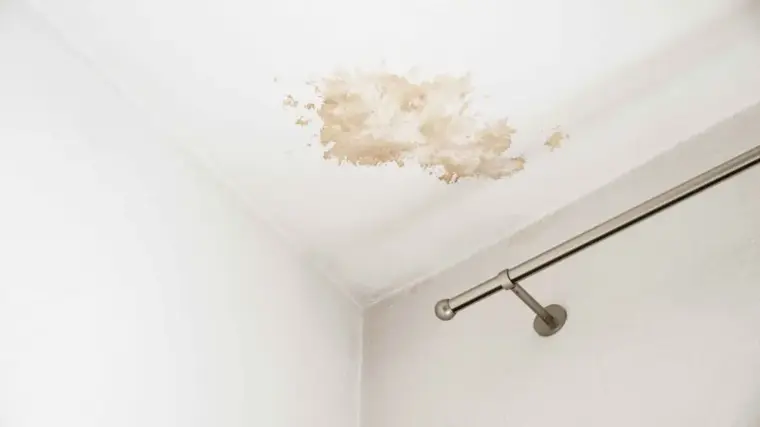
How condo water damage is handled in Woodland Hills
Moisture mapped first
The tech who does the walkthrough maps every wet material with pinless meters and thermal imaging before any equipment goes down.
Dried to the S500 goal
The drying team sizes air movers and LGR dehumidifiers to each room and keeps them running until readings reach the drying goal.
Documented for the claim
Daily readings, a moisture map and timestamped photos go into a claim file adjusters can follow.
When water comes through from another unit
- 1
Knock on the unit above
Ask the neighbor to close the fixture valve or the unit shutoff.
- 2
Call building management
The manager or association can shut risers and reach empty units.
- 3
Protect the unit below
Warn the neighbor downstairs; water rarely stops at one floor.
- 4
Photograph your unit
Shoot ceilings, walls and floors before anything is moved.
What does condo water damage cost in Woodland Hills, CA?
In Woodland Hills, CA, condo and apartment water damage typically runs $1,200 to $10,000 or more per building event, depending on how many units the water reached and how much ceiling, wall and flooring material has to come out.
One unit, one room
$1,200 to $2,800- Extraction
- Drying in place
- Unit log
Two or three units
$2,800 to $6,500- Ceiling and wall cuts
- Separate logs
- Hallway checks
Several floors or common areas
$6,500 to $10,000+- Stacked units
- Common areas
- Coordinated scope
The drivers are the water category, the square footage, the material class and how fast drying started. For a planning range, try the water damage cost calculator.
The condo water damage process, step by step
- Step 1
Map every unit
The tech checks the source unit and every unit and hallway around it.
- Step 2
Extract
Portable extraction clears standing water on each floor.
- Step 3
Open where needed
Wet ceiling drywall, baseboard and pad come out where readings demand it.
- Step 4
Dry and log
Each unit gets its own equipment plan and daily readings.
Warner Center has filled with mid-rise and high-rise apartments and condos, from the blocks around Westfield Topanga to the newer buildings near Warner Center Park, and older garden complexes still line streets across Woodland Hills. In a stacked building, water from a toilet supply line, a washer hose, a water heater or a sprinkler head does not stay in one home. It follows joists, pipe chases and slab penetrations down to the units below and sideways into hallways.
Mapping a multi-unit loss
The first job is finding every place the water went, not just where it showed up. The tech who does the walkthrough checks:
- The source unit, including under cabinets and behind the toilet and washer
- Every unit below, following the water down ceilings and walls
- Units beside the source, since water crosses shared walls at floor level
- Hallways, stairwells and garage ceilings under the affected units
Thermal imaging and pinless meters find water above ceilings and behind walls without opening them, so cuts happen only where readings call for them.
One drying plan per unit
Each unit gets its own equipment plan and its own daily log, because each unit often has its own owner, renter and policy. Ceiling drywall that sagged or held standing water usually comes down; drywall with lower readings can often be dried in place with air movers and LGR dehumidifiers. Equipment in a condo also has to respect building rules on noise, power and access, which the drying team works out with management. The structural drying page covers how equipment is sized.
Who pays and what the file needs
Responsibility depends on where the leak started and on the association's governing documents, the building's master policy and each owner's or renter's policy. A clean record helps every party: the source, the moisture map for each unit, daily readings and photos taken before demolition. The California Department of Insurance publishes consumer guidance on condo and renters coverage, and Ready.gov covers home safety after water gets in. Coverage depends on your policy, so it is worth checking with your own insurer.
Where condo water damage is handled around Woodland Hills
The Woodland Hills restoration crew works ZIP codes 91364 and 91367, from the Serrania hillsides and the Ventura Boulevard corridor to Warner Center and Walnut Acres, plus Tarzana, West Hills, Canoga Park and Calabasas next door.
See every neighborhood coveredRelated water damage services in Woodland Hills
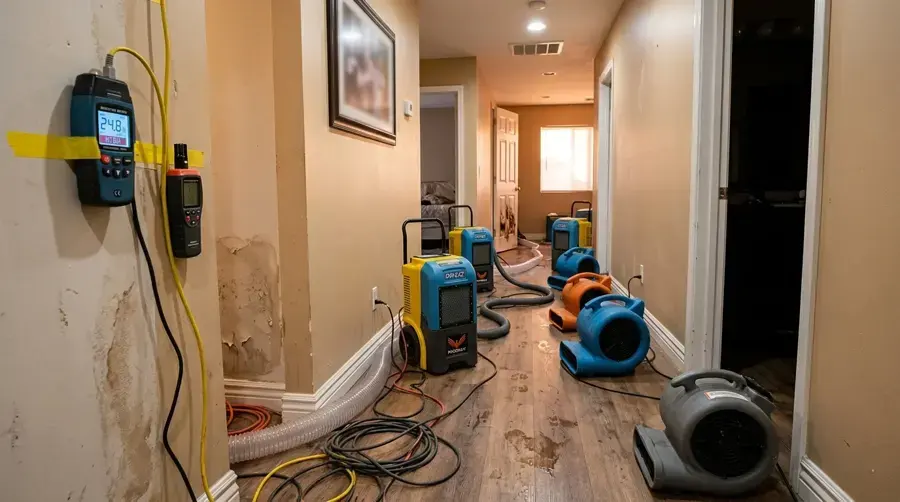 Structural Drying and DehumidificationAir movers and LGR dehumidifiers run until readings reach the drying goal.View service
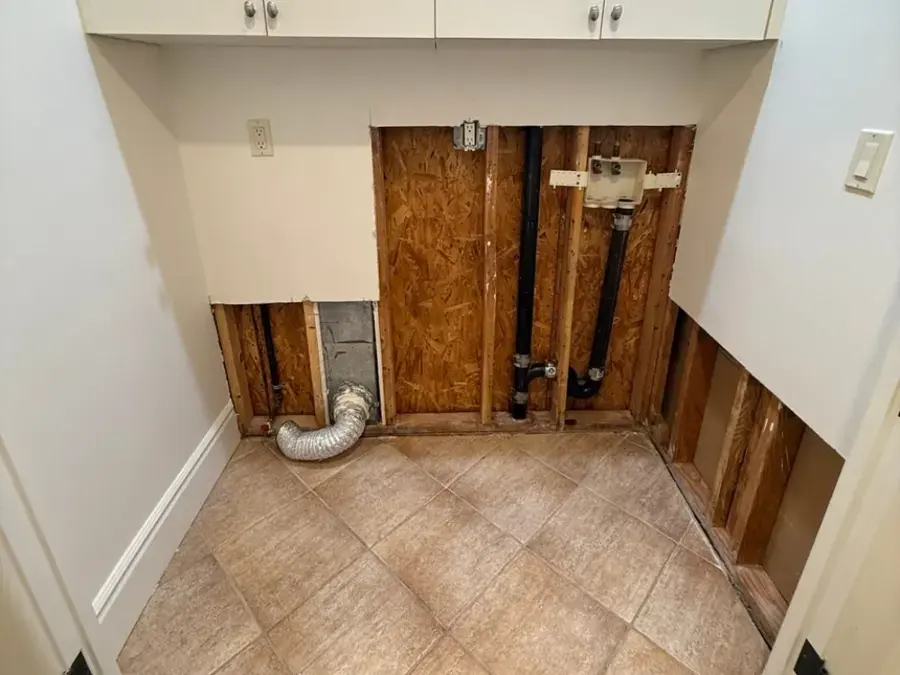 Appliance and Supply Line LeaksWasher hoses, fridge lines, dishwasher feeds and toilet supplies that let go.View service
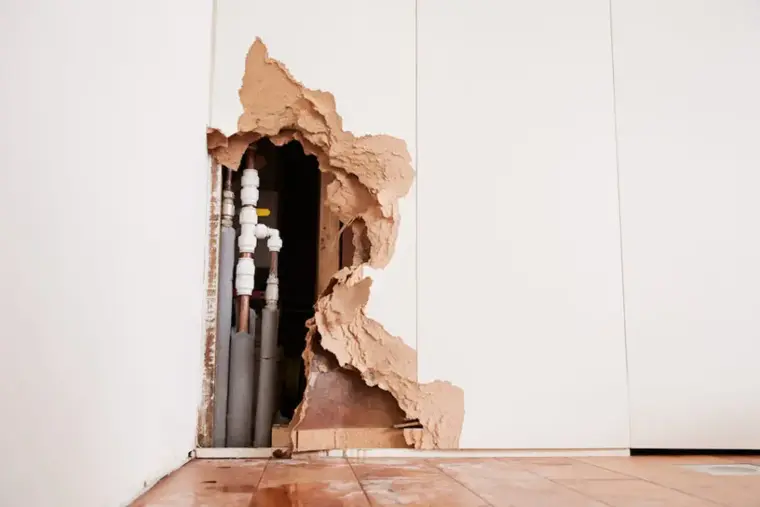 Burst Pipe CleanupSplit supply pipe in a wall or ceiling, extracted and dried inside the cavity.View service
Condo water damage questions in Woodland Hills
Q1Who is responsible when water comes from the unit above?
It depends on where the leak started, the association's governing documents and the policies involved: the upstairs owner, the association's master policy and your own condo or renters policy each cover different parts. A per-unit moisture map helps every party.
Q2Why does every unit need its own drying log?
Each unit usually has its own owner and policy. A separate log shows exactly what was wet, what was removed and when each unit reached the drying goal.
Q3Does the ceiling have to come down?
Not always. Ceiling drywall that sagged or held standing water is usually removed. Drywall with moderate readings can often be dried in place through small openings.
Q4Can the building stay occupied during drying?
Usually yes. The drying team plans equipment around building rules on noise, power and access, and contains work areas so neighbors are not affected.
Q5What if the unit above is empty?
Building management or the association can open an empty unit and shut its water. That is often the fastest way to stop a leak that is coming through a ceiling.
Q6How long does a condo leak take to dry?
A single unit caught early often dries in three to four days. Stacked losses across several units can take a week, since each unit dries on its own readings.
Water coming through a Woodland Hills ceiling? Call now.
The restoration team maps every affected unit, dries each one to the IICRC S500 goal and keeps a separate log for each owner.