Slab Leak Water Damage in Woodland Hills, CA
A pinhole in copper under the slab wets flooring and walls long before anyone sees water. The drying team maps the wet concrete and dries it to a verified reading after the plumber repairs the line.
(888) 578-6508Warm spot on the floor? Call now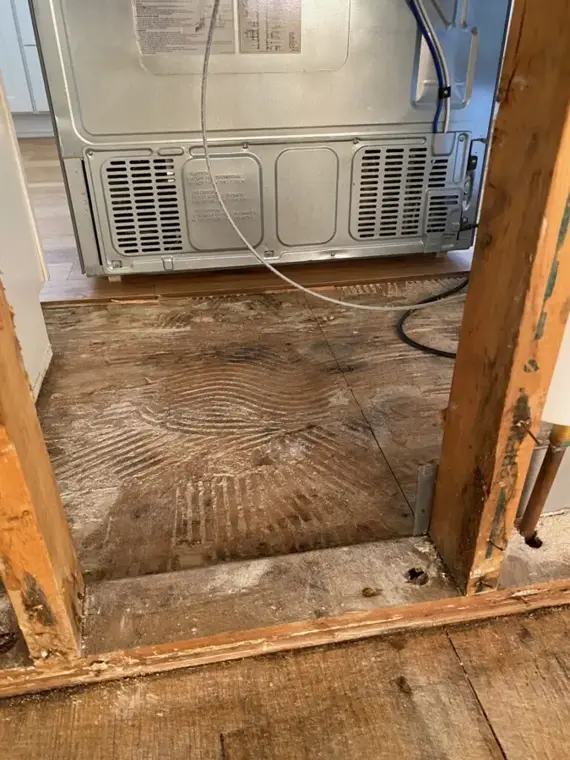
How slab leak water damage is handled in Woodland Hills
Moisture mapped first
The tech who does the walkthrough maps every wet material with pinless meters and thermal imaging before any equipment goes down.
Dried to the S500 goal
The drying team sizes air movers and LGR dehumidifiers to each room and keeps them running until readings reach the drying goal.
Documented for the claim
Daily readings, a moisture map and timestamped photos go into a claim file adjusters can follow.
When you suspect a leak under the slab
- 1
Check the meter
Turn off every tap and watch the meter's leak indicator for movement.
- 2
Close the main
If the meter moves, close the main shutoff until a plumber arrives.
- 3
Feel the floor
Note warm strips on tile or plank and any damp baseboard.
- 4
Photograph the signs
Shoot stains, lifting seams and the meter before flooring comes up.
What does slab leak water damage cost in Woodland Hills, CA?
In Woodland Hills, CA, drying out slab leak water damage typically runs $1,500 to $7,500 on top of the plumbing repair, depending on how much flooring comes up and how long the concrete takes to dry.
Caught early
$1,500 to $2,800- One room of flooring
- Minor wall wicking
- Four to five days of drying
Spread under several rooms
$2,800 to $5,200- Plank or tile removed
- Lower drywall cut
- Desiccant drying
Long-running leak
$5,200 to $7,500+- Wide slab saturation
- Cabinets pulled
- Extended drying and logs
The drivers are the water category, the square footage, the material class and how fast drying started. For a planning range, try the water damage cost calculator.
The slab leak water damage process, step by step
- Step 1
Trace
The tech maps the wet area with thermal imaging once the plumber isolates the leak.
- Step 2
Remove flooring
Plank, laminate or tile over the wet slab comes up so the concrete can breathe.
- Step 3
Dry the slab
Desiccant or LGR dehumidifiers and mats pull water out of the concrete.
- Step 4
Verify
Daily readings continue until slab and walls meet the drying goal.
The flats of Woodland Hills north of Ventura Boulevard, Walnut Acres and the streets toward Victory Boulevard, filled with single-story ranch homes in the post-war decades, most poured on concrete slabs with copper supply pipe running under or through the concrete. Decades of water pressure, hard Los Angeles water and pipe rubbing against gravel wear small holes in that copper, and the 1994 Northridge earthquake moved many of these slabs. A slab leak is quiet: a warm strip on the tile, a baseboard that never dries, a plank lifting at the seam or a water bill that jumps.
How the wet area gets traced
A plumber finds and repairs or reroutes the pipe. The restoration side traces where the water went, which is almost always wider than the leak point. The tech who does the walkthrough uses:
- Thermal imaging to spot the warm or cool band a hot or cold line leaves in the floor
- Pinless meters across the floor and along the base of every nearby wall
- Pin readings in baseboard and drywall to see how high the water wicked
Why slab drying takes longer
Concrete holds water deep and gives it up slowly, so the IICRC S500 treats it as a Class 4 drying situation. Vinyl plank, laminate and tile trap moisture against the slab, so flooring over the wet area usually comes up. The drying team then runs dehumidifiers with air movers, and drying mats where the slab is saturated. A contained slab leak often takes five to seven days to dry; a leak that ran for weeks takes longer. Hardwood over a slab leak is covered on the hardwood floor page.
Water bills and the claim file
The EPA WaterSense program explains how to use the water meter to confirm a hidden leak. For the claim, the file carries the plumber's leak location, the moisture map, daily readings and photos taken before flooring came up. Many policies treat the pipe repair and the resulting water damage differently, and the California Department of Insurance publishes guidance on homeowner claims. It is worth checking with your own insurer.
Where slab leak water damage is handled around Woodland Hills
The Woodland Hills restoration crew works ZIP codes 91364 and 91367, from the Serrania hillsides and the Ventura Boulevard corridor to Warner Center and Walnut Acres, plus Tarzana, West Hills, Canoga Park and Calabasas next door.
See every neighborhood coveredRelated water damage services in Woodland Hills
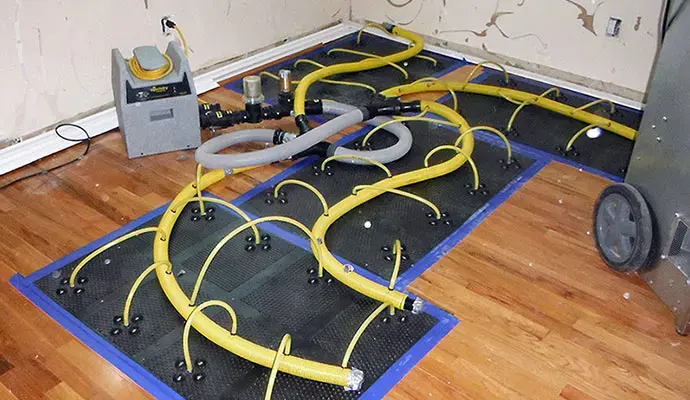 Hardwood Floor Water DamageCupped or crowning wood floors dried with mats and dehumidifiers where they can be saved.View service
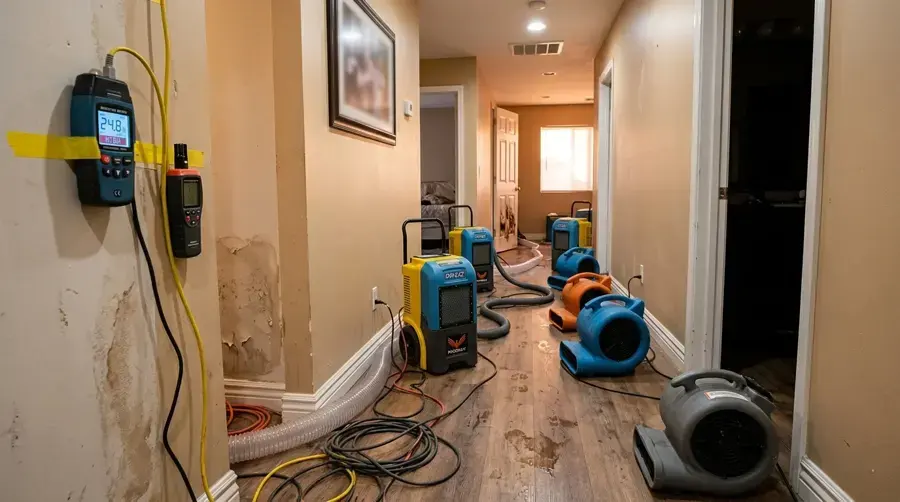 Structural Drying and DehumidificationAir movers and LGR dehumidifiers run until readings reach the drying goal.View service
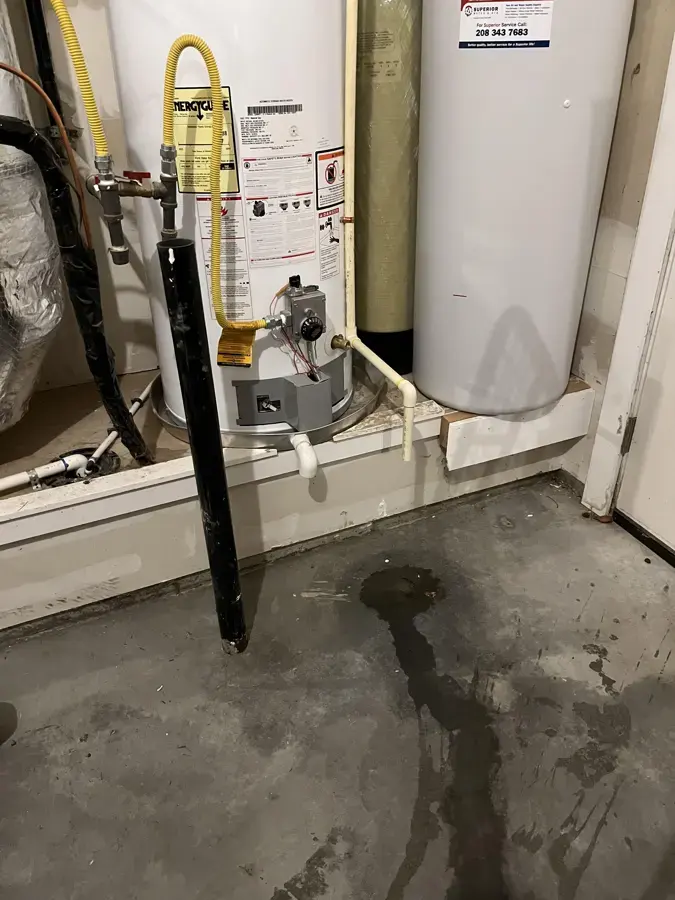 Water Heater Leak CleanupHard-water tanks that fail in garages and closets, caught before the slab soaks.View service
Slab leak water damage questions in Woodland Hills
Q1What are the signs of a slab leak?
A warm or hot strip on the floor, damp baseboard or carpet with no leak above, plank or tile lifting at the seams, the sound of running water with every fixture off, a meter that keeps moving and a water bill that jumps with no new use.
Q2Who repairs the slab leak itself?
A plumber locates and repairs or reroutes the pipe. The restoration team then maps and dries the wet slab, flooring and walls.
Q3Does all the flooring have to come up?
Only over the wet area, and only where readings show the flooring is trapping moisture. Vinyl plank, laminate and tile over a wet slab usually come up so the concrete can dry.
Q4How long does a wet slab take to dry?
A contained slab leak often dries in five to seven days. A leak that ran for weeks can take longer. Equipment comes out when the slab reads within 2 to 4 points of a dry reference.
Q5Why are slab leaks common in Woodland Hills?
Many homes in the flats were built in the 1950s and 1960s on slabs with copper supply pipe underneath. Pressure, hard water, pipe wear and earthquake movement over decades cause pinholes.
Q6Is slab leak damage covered by insurance?
Many policies cover sudden water damage but treat the pipe repair or long-term leaks differently. Coverage depends on your policy, so it is worth checking with your own insurer.
Signs of a slab leak in Woodland Hills? Call now.
The drying team maps the wet concrete, dries the slab and walls to the IICRC S500 goal and logs every reading for the claim.