Sewage Backup Cleanup in Woodland Hills, CA
Sewage is Category 3 the moment it comes up a drain. The mitigation team contains the area, removes what the sewage touched, treats every surface and dries the structure.
(888) 578-6508Sewage coming up a drain? Call now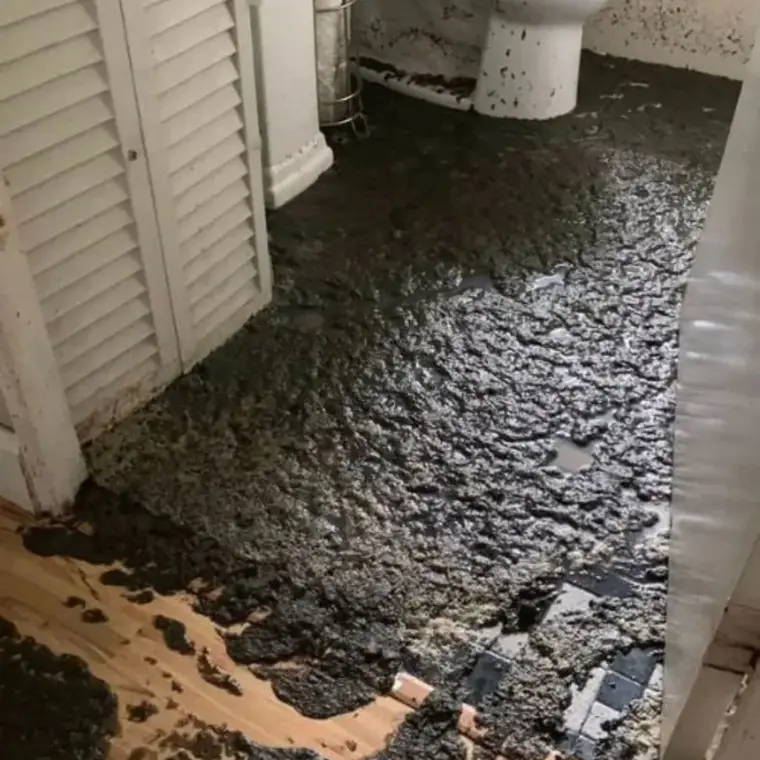
How sewage backup cleanup is handled in Woodland Hills
Moisture mapped first
The tech who does the walkthrough maps every wet material with pinless meters and thermal imaging before any equipment goes down.
Dried to the S500 goal
The drying team sizes air movers and LGR dehumidifiers to each room and keeps them running until readings reach the drying goal.
Documented for the claim
Daily readings, a moisture map and timestamped photos go into a claim file adjusters can follow.
When sewage comes up a drain
- 1
Stop using water
Do not flush, run taps or start the washer; every gallon adds to the backup.
- 2
Keep everyone out
Keep children, pets and anyone with a health condition away from the area.
- 3
Close the doors
Shut doors to the affected rooms and turn off central air if it pulls from there.
- 4
Call a plumber too
A plumber clears the line; the mitigation team handles what came out of it.
What does sewage backup cleanup cost in Woodland Hills, CA?
In Woodland Hills, CA, sewage backup cleanup typically runs $2,000 to $10,000 or more, depending on how much sewage came up, how many rooms it reached and how much flooring and drywall has to come out.
One bathroom
$2,000 to $3,800- Containment
- Removal and treatment
- Drying
Bathroom and hallway or bedroom
$3,800 to $7,000- Carpet and pad removed
- Flood cuts
- HEPA air scrubbing
Several rooms or a lower level
$7,000 to $10,000+- Wide removal
- Extended containment
- Extended drying
The drivers are the water category, the square footage, the material class and how fast drying started. For a planning range, try the water damage cost calculator.
The sewage backup cleanup process, step by step
- Step 1
Contain
The mitigation team walls off the area with poly and sets negative air.
- Step 2
Remove
Sewage is extracted and porous materials are bagged and removed.
- Step 3
Clean and treat
Hard surfaces are cleaned and treated with an EPA-registered antimicrobial.
- Step 4
Dry and verify
Structural drying runs until readings meet the goal.
Many Woodland Hills homes still drain through clay or cast-iron sewer laterals laid when the neighborhood was built out. Mature trees along the older streets send roots into the joints, and years of grease and wipes narrow the pipe. When the line blocks, sewage comes up the lowest drain in the house: a shower, a floor drain, a ground-floor toilet or the tub in a lower-level bathroom on a hillside lot. Heavy winter storms can also overload the public sewer and push water back toward homes.
Why sewage is handled differently
Sewage carries bacteria, viruses and parasites, so the IICRC S500 treats it as Category 3 from the first minute. The rule is simple: porous materials sewage touched are removed, not dried. That means:
- Carpet and pad come out, along with any drywall and insulation the sewage reached
- Workers wear PPE: respirators, gloves, boots and suits
- Poly containment and HEPA air scrubbers keep contamination out of the rest of the house
- Hard surfaces are cleaned, then treated with an EPA-registered antimicrobial left for its full dwell time
Cleanup, drying and clearance
After removal and cleaning, the drying team sets air movers and LGR dehumidifiers and dries the framing and slab to the drying goal. Contents that can be cleaned are separated from porous items that cannot. Before rebuilding starts, the area is checked for cleanliness and dryness. A one-bathroom backup often takes three to five days from containment to dry; a lower level takes longer. Backups caused by storm water crossing the yard are covered on the storm flood cleanup page.
Health, the lateral and the claim
The CDC explains the health risks of contact with sewage and flood water, and the OSHA covers protective equipment for cleanup work. A plumber clears and inspects the lateral, often with a camera. Sewer backup coverage is often a separate endorsement, so it is worth checking with your own insurer.
Where sewage backup cleanup is handled around Woodland Hills
The Woodland Hills restoration crew works ZIP codes 91364 and 91367, from the Serrania hillsides and the Ventura Boulevard corridor to Warner Center and Walnut Acres, plus Tarzana, West Hills, Canoga Park and Calabasas next door.
See every neighborhood coveredRelated water damage services in Woodland Hills
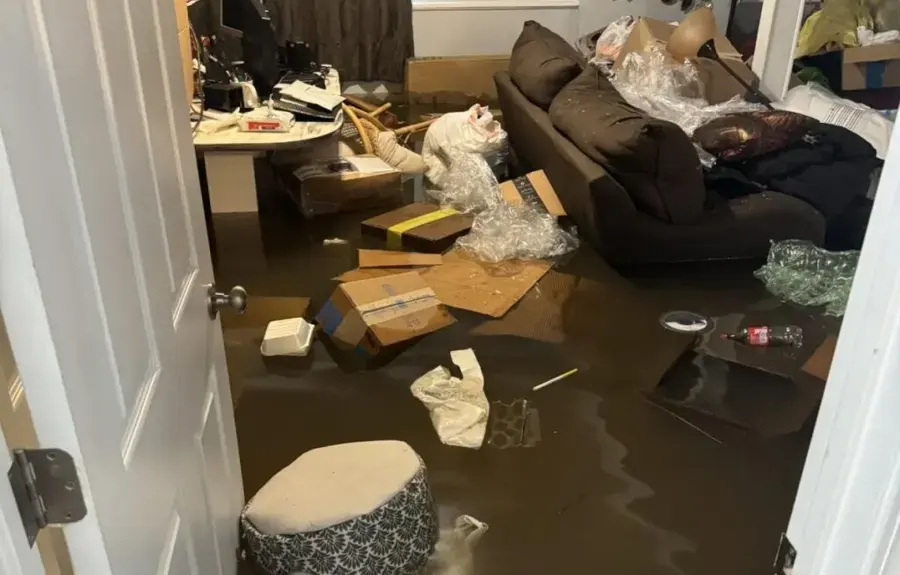 Storm Flood CleanupWinter storm water at door level, pumped out, cleaned and dried to a verified reading.View service
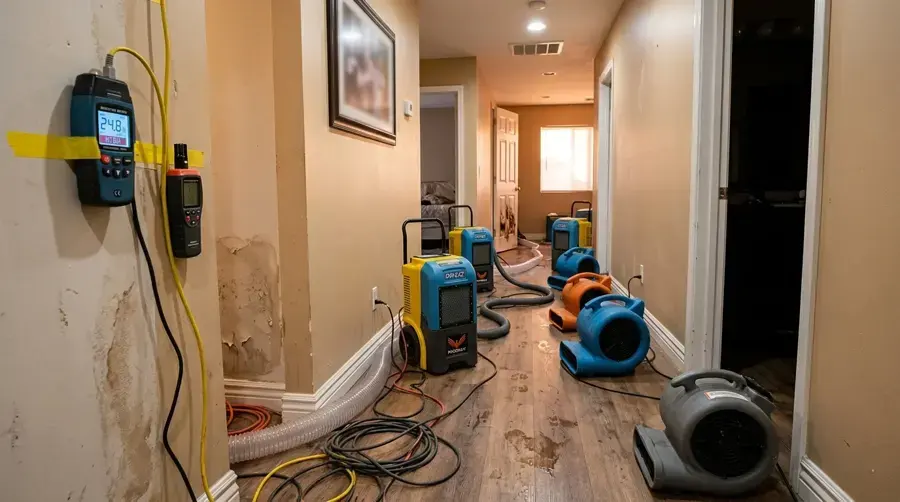 Structural Drying and DehumidificationAir movers and LGR dehumidifiers run until readings reach the drying goal.View service
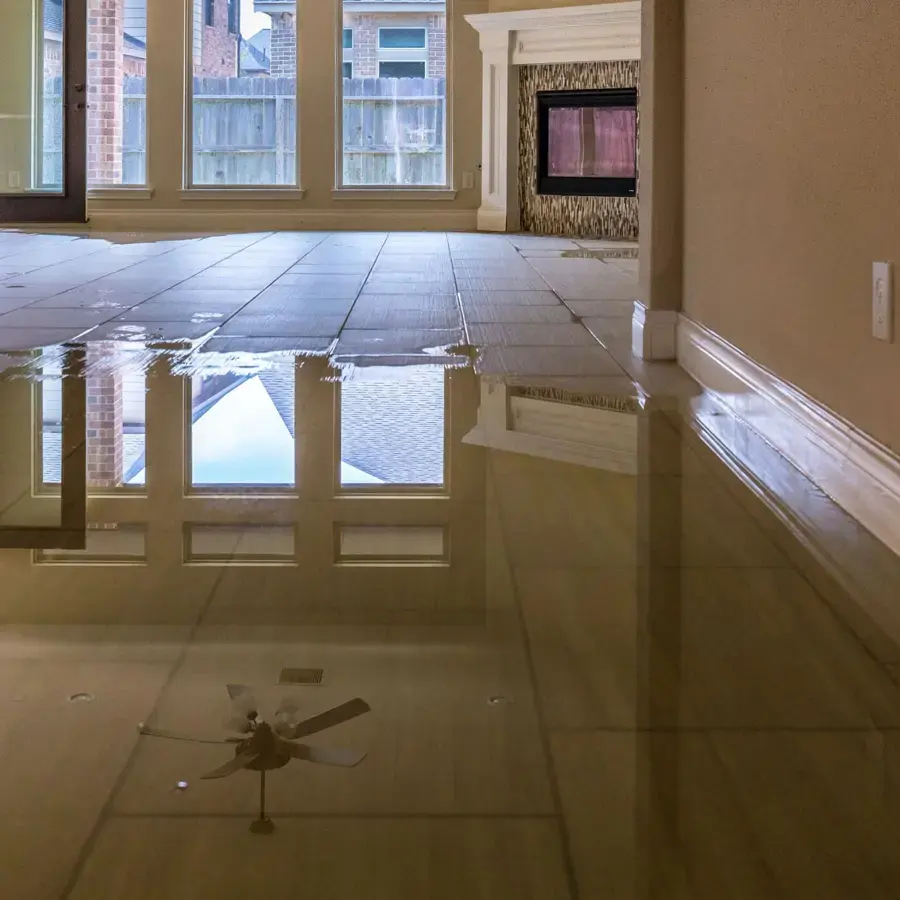 Water Extraction and RemovalTruck-mounted extraction pulls standing water before it wicks into walls, cabinets and subfloor.View service
Sewage backup cleanup questions in Woodland Hills
Q1Can I clean up a small sewage backup myself?
Sewage is Category 3 water with bacteria and viruses. Even a small backup needs PPE, removal of porous materials and treatment with an EPA-registered antimicrobial. Keep children and pets away and avoid contact.
Q2Does the carpet have to be thrown out?
Yes, where sewage touched it. Carpet and pad hold contamination that cannot be reliably cleaned, so they are removed and bagged.
Q3Why did the sewage come up in my shower?
Sewage rises to the lowest drain in the house when the lateral is blocked, often by tree roots or grease. The shower or a ground-floor toilet is usually first.
Q4Is the house safe to stay in during cleanup?
Usually, if the affected area is contained and sealed off. People with health conditions, infants and pets are best kept away until cleaning and treatment are done.
Q5How long does sewage cleanup take?
A one-bathroom backup often takes three to five days from containment to dry. Lower levels and larger areas take longer.
Q6Is a sewage backup covered by insurance?
Sewer backup coverage is often a separate endorsement on a homeowner policy. Coverage depends on your policy, so it is worth checking with your own insurer.
Sewage backup in a Woodland Hills home? Call now.
The mitigation team contains the area, removes what the sewage touched, treats every surface and dries the structure to the IICRC S500 goal.