Burst Pipe Cleanup in Woodland Hills, CA
A burst supply line can move hundreds of gallons an hour into walls, ceilings and floors. The extraction crew pulls the water, and the drying team dries every cavity the water reached.
(888) 578-6508Pipe still spraying? Call now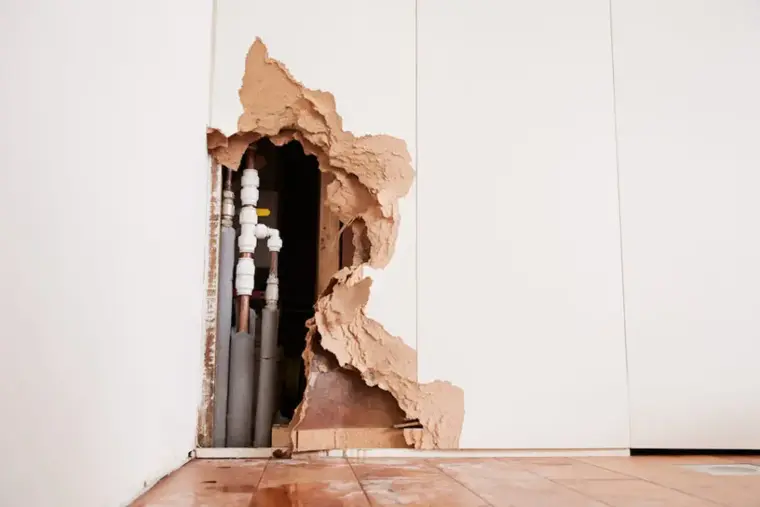
How burst pipe cleanup is handled in Woodland Hills
Moisture mapped first
The tech who does the walkthrough maps every wet material with pinless meters and thermal imaging before any equipment goes down.
Dried to the S500 goal
The drying team sizes air movers and LGR dehumidifiers to each room and keeps them running until readings reach the drying goal.
Documented for the claim
Daily readings, a moisture map and timestamped photos go into a claim file adjusters can follow.
The first minutes after a pipe bursts
- 1
Close the main
Find the main shutoff, usually at the front hose bib or the meter box at the curb, and close it.
- 2
Open a low faucet
Drain the pressure left in the lines through the lowest tap.
- 3
Kill wet circuits
Switch off breakers for rooms where water reached outlets or fixtures.
- 4
Catch and photograph
Put buckets under drips, then photograph walls, ceilings and floors.
What does burst pipe cleanup cost in Woodland Hills, CA?
In Woodland Hills, CA, burst pipe cleanup typically runs $1,000 to $8,000, depending on how long the pipe ran, how many rooms and floors the water reached and how much drywall and flooring has to come out.
One wall or room
$1,000 to $2,500- Extraction
- Cavity drying
- Three to four days
Several rooms
$2,500 to $5,000- Flood cuts
- Pad removed
- Daily moisture logs
Two floors or a ceiling
$5,000 to $8,000+- Ceiling drywall down
- Upstairs and downstairs
- Extended drying
The drivers are the water category, the square footage, the material class and how fast drying started. For a planning range, try the water damage cost calculator.
The burst pipe cleanup process, step by step
- Step 1
Stop and map
The tech confirms the water is off and maps every wet wall, ceiling and floor.
- Step 2
Extract
The extraction crew pulls standing water and wrings carpet and pad.
- Step 3
Open cavities
Small holes or flood cuts let air into wet walls and ceilings.
- Step 4
Dry and verify
Air movers and dehumidifiers run until readings meet the goal.
Burst pipes in Woodland Hills rarely come from freezing. They come from age, pressure and movement: galvanized pipe in older homes rusting from the inside, copper pinholing after decades of hard water, a fitting that lets go behind a wall, or a line that shifted in an earthquake and finally cracked. When a supply line splits at full pressure, water sprays into the wall cavity, runs along the bottom plate and soaks everything below it.
Where the water hides
What shows on the surface is usually a fraction of the loss. The tech who does the walkthrough checks:
- Wall cavities on both sides of the break, where insulation holds water
- Ceiling joists and drywall below a second-floor or attic line
- Subfloor and slab edges under cabinets and baseboards
- Rooms on the other side of the wall and the floor below
Thermal imaging and pinless meters find this water without opening walls, so demolition stays limited to what readings call for.
Drying walls and ceilings in place
Clean water caught early can often be dried inside the cavity. The drying team drills small holes low on the wall or removes baseboard, then pushes air into the cavity while LGR dehumidifiers pull moisture out of the room. Ceiling drywall that sagged or held water comes down for safety. Water that sat for days, or wet drywall that has started to break down, is removed rather than dried. A contained burst pipe loss often dries in three to five days. See structural drying for how the equipment is sized.
After the plumber and the claim
A plumber repairs the pipe; the restoration team documents and dries the damage. The file carries the moisture map, daily readings and photos taken before demolition. Sudden pipe failures are commonly covered, while slow leaks may not be. Ready.gov covers electrical safety around water, and the California Department of Insurance publishes homeowner claim guidance. Coverage depends on your policy, so it is worth checking with your own insurer.
Where burst pipe cleanup is handled around Woodland Hills
The Woodland Hills restoration crew works ZIP codes 91364 and 91367, from the Serrania hillsides and the Ventura Boulevard corridor to Warner Center and Walnut Acres, plus Tarzana, West Hills, Canoga Park and Calabasas next door.
See every neighborhood coveredRelated water damage services in Woodland Hills
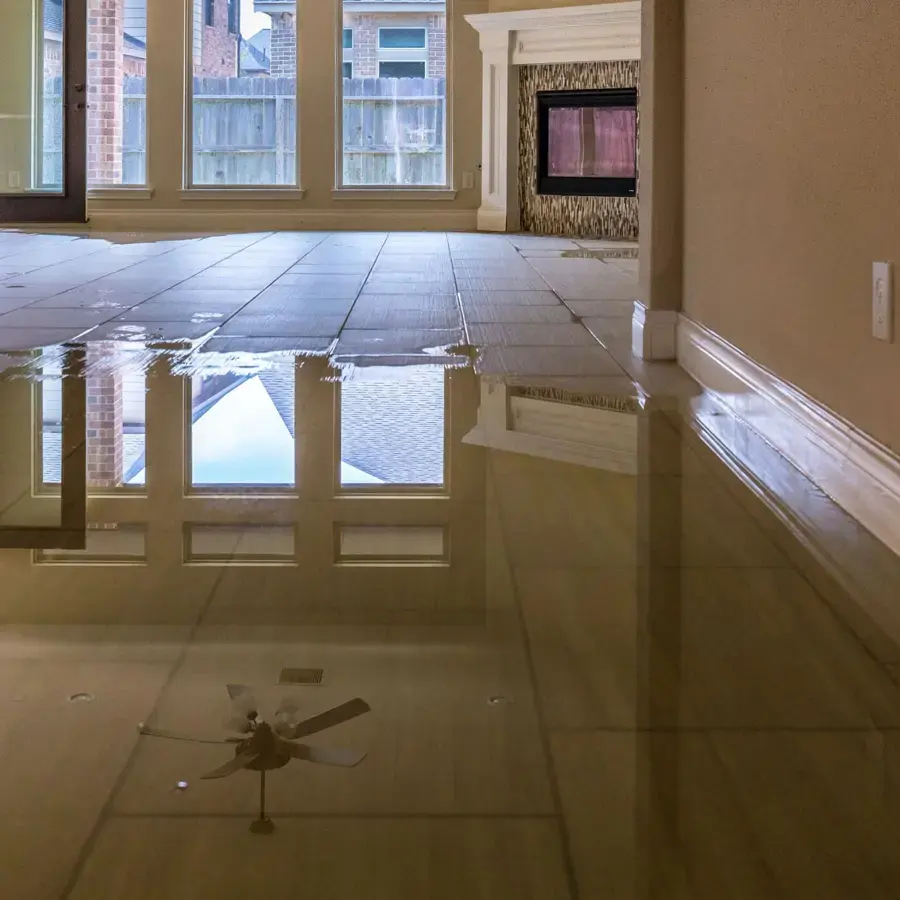 Water Extraction and RemovalTruck-mounted extraction pulls standing water before it wicks into walls, cabinets and subfloor.View service
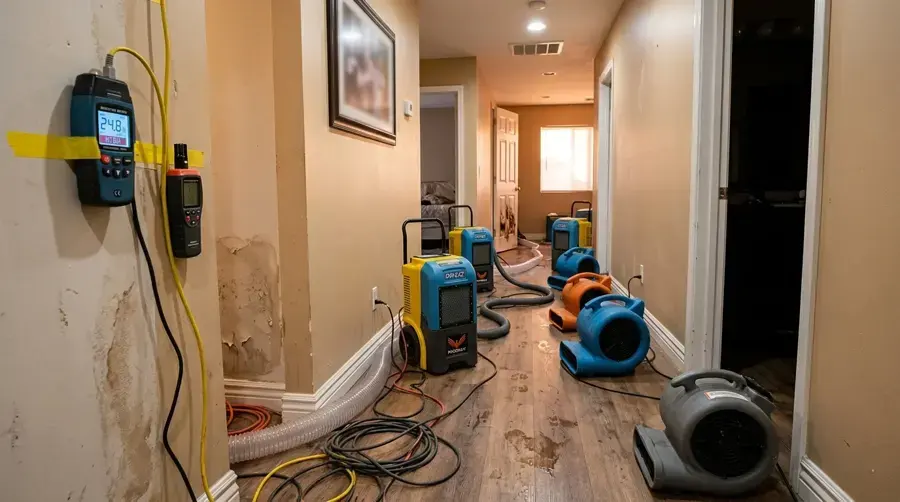 Structural Drying and DehumidificationAir movers and LGR dehumidifiers run until readings reach the drying goal.View service
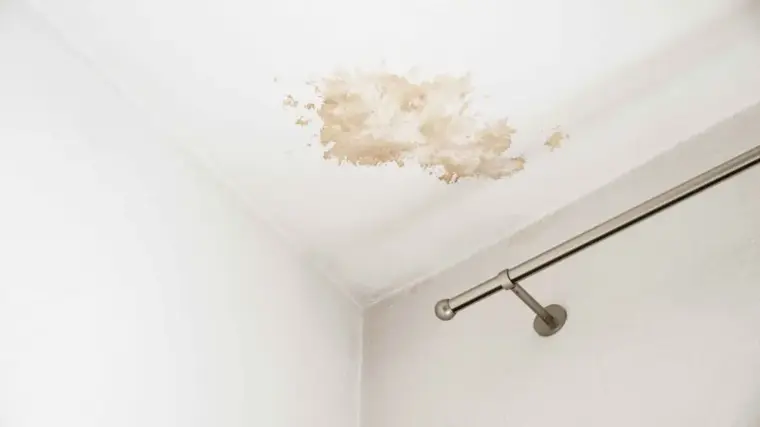 Condo and Apartment Water DamageWarner Center leaks that cross from one unit to the next, logged unit by unit.View service
Burst pipe cleanup questions in Woodland Hills
Q1Where is the main water shutoff in most Woodland Hills homes?
Usually near the front hose bib where the line enters the house, or at the meter box near the curb. Condos often have a unit shutoff in a closet or under the water heater.
Q2Can the walls be dried without tearing them out?
Often yes, when the water was clean and drying started early. Small holes or removed baseboard let air into the cavity. Drywall that sagged, crumbled or sat wet for days is removed.
Q3Why do pipes burst in a warm climate?
Age and pressure, not freezing: galvanized pipe corrodes from the inside, copper pinholes after years of hard water, fittings fail and earthquake movement stresses old lines.
Q4How much water can a burst pipe release?
A split supply line can release hundreds of gallons an hour at full pressure, which is why closing the main is the first step.
Q5How long does drying take after a burst pipe?
A contained loss often dries in three to five days. Losses that reached a ceiling or a second floor take longer. Equipment comes out when readings meet the drying goal.
Q6Is burst pipe damage covered by insurance?
Sudden and accidental pipe failures are commonly covered, while long-term leaks and wear may not be. Coverage depends on your policy, so it is worth checking with your own insurer.
Burst pipe in a Woodland Hills home? Call now.
The extraction crew pulls the water and the drying team dries every wall, ceiling and floor the pipe reached, with every reading logged.